
Feelings Friends
Ages 2–6
A gentle game about faces and feelings
Naming feelings is a big step for young children. When they can see happy, sad, angry or scared in a face, they understand other people better, and find it easier to talk about their own feelings.
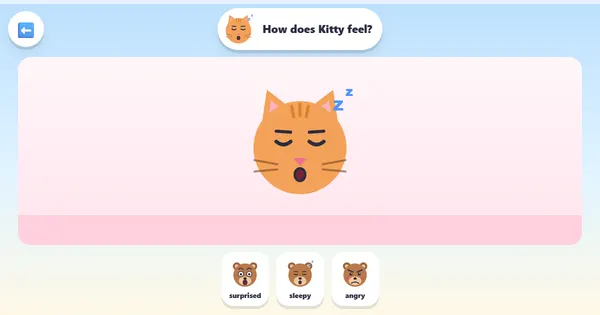
In our feelings games, children read the feelings on friendly faces, then work out how a friend might feel when something happens: a balloon floats away, a surprise party starts, a thunderstorm rumbles.
Ages 2–6
A gentle game about faces and feelings
Many children use words like happy and sad from around 2 to 3, and recognize angry and scared soon after. Understanding what can cause a feeling, and that other people can feel differently, develops between about 3 and 6.
Children who can name a feeling find it easier to tell you how they feel instead of showing it through tantrums, and to understand how others feel. Naming a feeling is a first step toward managing it.
Name feelings in everyday moments, both yours and theirs: “You look frustrated. That tower was tricky!” Talk about how characters feel in stories, and make faces in the mirror together.